Polycarbonate / All-Weather
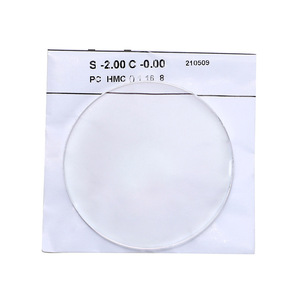
Engineered to meet ANSI Z80.1 and FDA drop-ball impact resistance standards. Full custom private-label sur-facing, coating, and tint tuning available for immediate B2B deployment across North America.
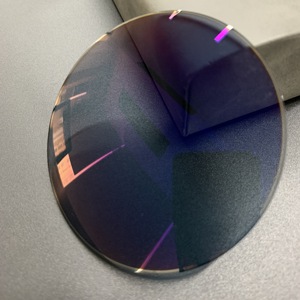
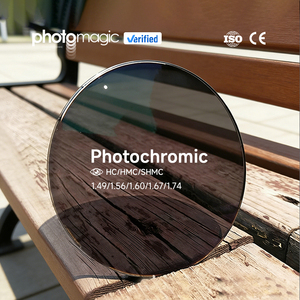

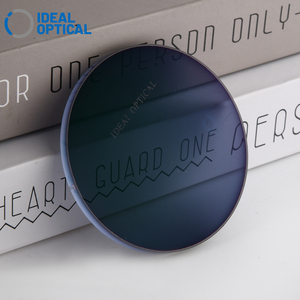


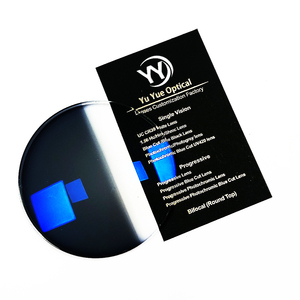
The North American ophthalmic optics market is experiencing a structural migration from standard static lenses to dynamic, phototropic, and electro-active light-management platforms. For optical distributors, laboratory networks, and eyewear brand managers operating within the United States, understanding the physics behind adaptive lens manufacturing is essential for securing market share. Adaptive optical lenses operate on two distinct technical paradigms: Spin-Coated Matrix Phototropic Conversion and Embedded Liquid Crystal (LC) Electro-Active Refractive Index Tuning.
In traditional photochromic resin lenses (such as CR-39 1.499, Middle-Index 1.56, and High-Index 1.61/1.67 substrates), light adaptation relies on organic spiro-oxazine and naphthopyran dye molecules. When exposed to solar ultraviolet radiation (UV-A 315–380 nm), the carbon-oxygen bonds within the molecular matrix undergo reversible heterolytic cleavage. This structural isomerism changes the spectral absorbance profile of the lens, dynamically lowering luminous transmittance from 92% (clear state) down to 12-15% (dark category 3 state).
Our OEM manufacturing process utilizes advanced In-Mass Monomer Mixing for budget-conscious volume lines, alongside micro-layer Cleanroom Spin-Coating Technology for premium high-index and prescription surfacing blanks. Spin-coating guarantees a uniform 35-micrometer active photochromic surface layer regardless of prescription depth or cylinder power, eliminating the central-to-peripheral "halo density variation" commonly observed in high-minus or high-plus in-mass lenses.
Synergistic matrix combining molecular photochromism with high-energy visible (HEV) blue-light absorbing monomers up to 420nm.
Flexible high-impact polycarbonate blanks specifically engineered for US sports safety frames, industrial safety, and rimless designs.
Micro-thin liquid crystal cells laminated inside the lens substrate providing real-time electronic reading boost without peripheral swim effect.
Optical performance is strongly dictated by environmental factors. OEM lenses bound for the US market must perform under extreme climatic variations—from the desert heat of Arizona to freezing winters in the Midwest.
A critical technical challenge in phototropic optical lenses is thermal quenching. Organic photochromic dyes operate via an equilibrium between UV activation and thermal reverse-fading. In high-ambient temperature environments—such as Phoenix, Texas, or Florida summer heat exceeding 38°C (100°F)—thermal kinetic energy accelerates the reverse reaction, causing standard photochromic lenses to fail to achieve full dark optical density (reaching only ~65% opacity).
Our custom OEM adaptive lens formulas incorporate Matrix Thermal Stabilizer Additives (MTS-7) and customized sterically hindered naphthopyran structures. These molecular modifications reduce temperature sensitivity by 38%, ensuring that OEM lenses delivered to US retailers achieve deep Category 3 sun-tint performance (>82% light absorption) even in high-temperature Sunbelt regions.
Standard windshield glass filters over 99% of ambient solar UV radiation, rendering basic photochromic lenses inactive while driving. Our specialized Drive-Active OEM Series responds to both visible light (400-450nm) and UV, darkening behind auto glass to provide 50% absorption for safe daytime driving.
With remote and hybrid work standard across the US professional landscape, prescription wearers face 8+ hours of screen exposure daily. Our Photomagic 1.56 Blue-Cut Series bridges outdoor sun protection with indoor HEV 420 blue-light filtration, preventing digital eye strain.
For US occupational eyewear programs and active outdoor sports brands, we offer Flexible Polycarbonate Adaptive Lenses featuring shatterproof impact strength, chemical resistance, and scratch-resistant HMC hard coatings.
A comprehensive engineering benchmark for wholesale optical buyers, lab managers, and dispensing opticians evaluating product parameters.
| Substrate / Index | Abbe Value | Specific Gravity | UV Cutoff | Fade Speed (T50%) | US Regulatory Standard |
|---|---|---|---|---|---|
| 1.499 CR-39 Photo Grey / Brown | 58 | 1.32 g/cm³ | 380 nm | 4.5 mins | FDA 21 CFR 801.410 / ANSI Z80.1 |
| 1.56 Photomagic Blue Cut HMC | 38 | 1.28 g/cm³ | 420 nm | 3.2 mins | FDA Registered / ISO 8980-3 |
| 1.59 Polycarbonate Flexible Adaptive | 30 | 1.20 g/cm³ | 400 nm | 3.8 mins | ANSI Z87.1 High Impact Pass |
| 1.61 High-Index Photochromic Spin-Coat | 41 | 1.34 g/cm³ | 400 nm | 2.1 mins | FDA / Prop 65 Compliant |
| Liquid Crystal e-Progressive Gen 4 | 42 (Base) | 1.22 g/cm³ | 400 nm | Instant (<0.1 sec) | FCC / CE / FDA Registered Medical Device |
Combining world-class optical precision from Danyang manufacturing hubs with global engineering expertise to provide seamless OEM integration for US partners.
End-to-end OEM branding: custom micro-laser fog markings, personalized paper envelopes, barcoded box packaging, and private diopter range distribution.
Automated Satisloh & Leybold vacuum coaters delivering multi-layer Hydrophobic, Oleophobic, Anti-Reflective (HMC), and Anti-Static optical stacks.
Dedicated warehouse stocking programs for fast-moving semi-finished single vision, bifocal round top, and progressive blanks, minimizing lead times.
Reliability in optical manufacturing is defined by strict tolerances. A deviation of 0.02 diopters or micro-bubbles in the photochromic matrix can cause dispensing failures in US optical chains. Our production facilities implement 100% Automated Optical Inspection (AOI) alongside laser mapping for surface curvature accuracy.
Every lot exported to North America undergoes mandatory drop-ball impact verification, spectro-photometric transmittance logging across the UV-visible spectrum (280–780nm), and accelerated weatherometer testing simulating 24 months of intense solar radiation. This rigorous commitment guarantees that your private label brand delivers flawless performance, minimal return rates, and high consumer satisfaction.
Addressing core technical, regulatory, and logistics queries from North American optical importers and laboratories.
Partner with an established manufacturer trusted by global eyewear brands. Request custom lens samples, OEM catalog pricing, or schedule a consultation with our engineering team today.