

Morrow e-Progressive electronic reading boost glasses presented on studio background
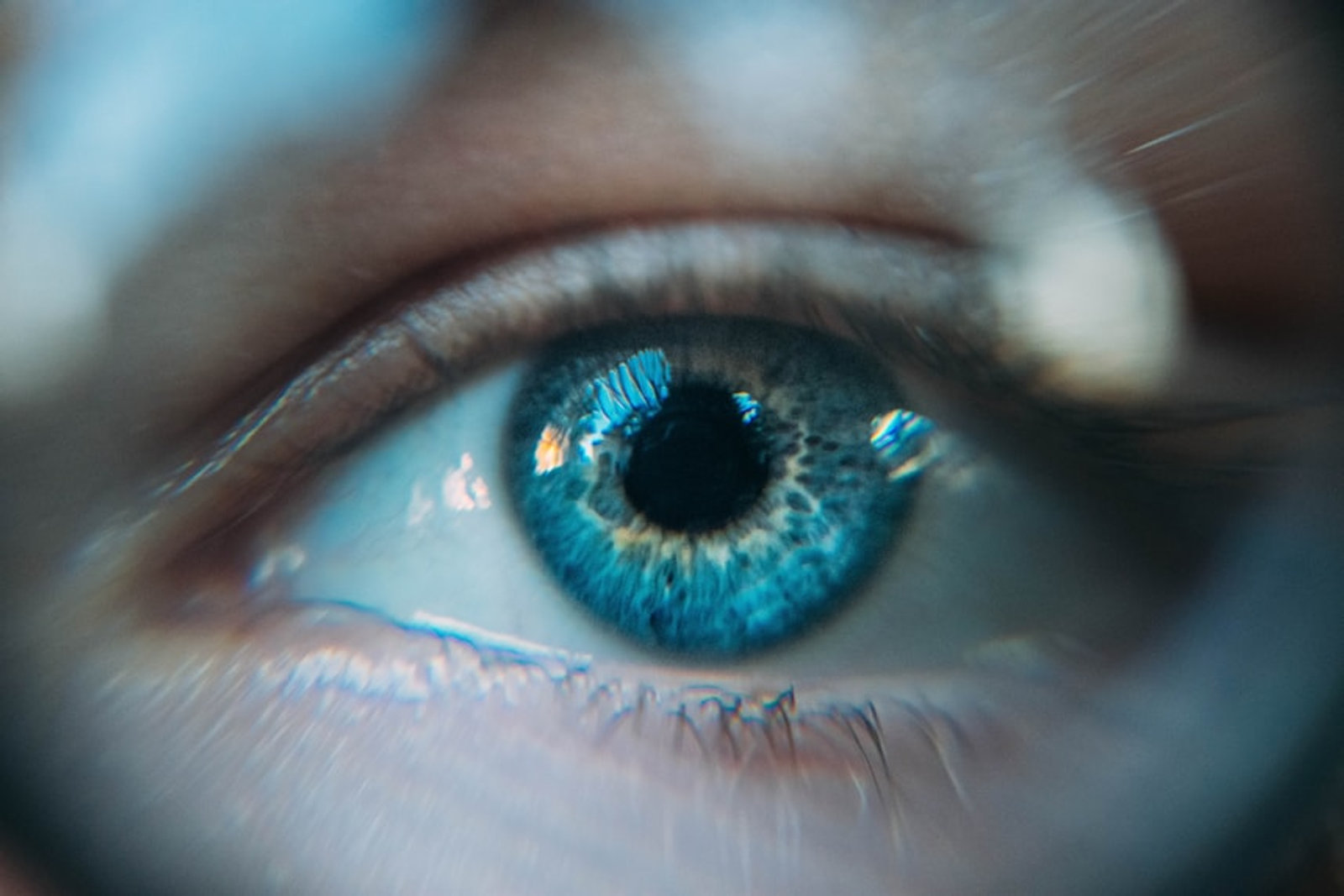
Macro view of human eye illustrating rapid adaptive optical focus
Architectural visual structure representing precise depth perception

B2B Optical Sourcing & Technology Guide

Electronic Reading Boost Glasses: Liquid-Crystal Active Focus for Global Procurement

Engineered for global optical distributors and ophthalmic professionals: e•Progressive Gen 4 active optics eliminate traditional progressive lens distortion, expanding near field of view by 33% and intermediate zones by 300%.

  • +33%Wider Near Field of View vs. Gen 3 PALs
  • 3.0×Expanded Intermediate Corridor Area
  • 0.1 sInstant Liquid Crystal Refractive Switching
  • < 5%Reported Non-Adaptation Drop-Out Rate

Industry Overview & Semantic Analysis

Reimagining Presbyopia: The B2B Case for Electronic Reading Boost Glasses

As the global demographic shifts upward, presbyopia management has entered a pivotal transition. For over half a century, optical distributors and practices relied on static Progressive Addition Lenses (PALs). However, traditional progressive lens geometries suffer from inherent optical compromises: lateral astigmatism, visual swim effect, narrow intermediate channels, and high patient non-adaptation rates. Electronic Reading Boost Glasses represent the definitive technological leap, replacing static lens geometry with active, dynamic electro-active liquid crystal optics.

The Fundamental Problem with Static Progressive Lenses

Traditional progressive lenses attempt to cram distance, intermediate, and near power into a single fixed glass or resin matrix. To achieve an addition (e.g., +2.00D to +2.50D), optical designers must grind steep surface curves. This physical constraint generates unalterable lateral distortion zones. When wearers turn their eyes sideways, look down at stairs, or scan multi-monitor workstations, they encounter blurred peripheral vision and geometric instability—often leading to eye strain, headaches, fall risks, and eventual product return.

The Electronic Reading Boost Paradigm Shift

By embedding a micro-thin, electro-active liquid crystal (LC) layer between precision optical substrates, electronic reading boost glasses separate base distance refraction from near magnification. When reading power is not required, the lens maintains a soft, pristine curvature with zero unwanted lateral blur. When near vision is needed, a low-voltage pulse re-orients liquid crystal molecules within 0.1 seconds, changing the refractive index dynamically. The wearer receives sharp near magnification on demand without forfeiting pristine peripheral spatial awareness.

Optical Engineering

Electro-Active Refraction: Laminated LC Cell Integration

Inside every Morrow e•Progressive Gen 4 optical lens sits a ultra-precise sandwich of optical polymer layers and ITO conductive transparent electrodes encapsulating an aligned liquid crystal cell matrix. When deactivated, the cell remains optically transparent, allowing light rays to pass unobstructed according to the patient's distance prescription.

Upon activation, an integrated micro-driver applies a calibrated voltage field across the LC layer. The molecules align along the electrical vector, instantly elevating the local refractive index. This creates an optical addition zone with immediate clarity for smartphone viewing, micro-soldering, reading, or desk work.

Demonstration: Technical operation of Morrow Gen 4 electro-active reading boost optical architecture.

Commercial Portfolio

Product Recommendations for Global Optical Retailers & Buyers

To meet diverse clinical prescriptions and consumer lifestyle demands, Morrow offers a standardized active-optics hardware platform configured for seamless dispensing across retail optical channels.

e•Progressive Gen 4 Professional Edition

Designed for corporate executives, software engineers, and optical wearers demanding long-duration intermediate monitor focus and rapid document scanning.

  • 3× expanded intermediate vision corridor optimized for desktop dual-monitors
  • Soft base addition reduces peripheral swimming during rapid movement
  • Integrated lithium-micro battery with multi-day active lifecycle
  • Precision adjustable nose-pads to lock in exact vertex distance (12mm–14mm)

Ray-tracing diagram comparing intermediate and near field expansion in Morrow Gen 4

e•Progressive Active Executive Edition

Tailored for active presbyopes who frequently transition between outdoor mobility, driving, sports, and immediate smartphone or gauge monitoring.

  • +33% wider near field of view for effortless reading without head tilting
  • Zero distance distortion for enhanced spatial safety on stairs and terrain
  • Ultra-lightweight titanium frame integration with 4 premium colorways
  • Instant 0.1-second reading boost button touch activation
Diagram showing dynamic optical zone activation in electronic reading boost glasses

R&D Roadmap

Where is smart presbyopia eyewear heading? As a pioneer in active optics, Morrow continuously pushes the boundaries of liquid crystal physics, sensor miniaturization, and micro-power management.

Macro optics representing sub-millisecond liquid crystal response times

Sub-100ms Switching Speeds

Next-generation R&D focuses on ultra-low-viscosity LC formulations that lower optical state switching latency to less than 50 milliseconds, making focus transitions totally invisible to the human visual cortex.

Person navigating urban environment safely with clear downward spatial vision

Autofocus Sensor Integration

Future iterations will combine micro-time-of-flight (ToF) distance sensors and eye-tracking arrays directly into the bridge, automatically triggering the reading boost the millisecond the gaze lowers to a screen or book.

Modern architectural depth representing expansive optical spatial field

Energy-Harvesting Micro Circuitry

R&D in solid-state thin-film batteries and ambient solar micro-charging allows active focus glasses to operate for weeks between charging cycles, setting a new benchmark for durable medical eyewear.

Technical Benchmarks

Optical & Hardware Specification Comparison

A consolidated engineering matrix for dispensing opticians, optical buyers, and medical device procurement officers evaluating Morrow Electronic Reading Boost Lenses against standard high-index PALs.

Technical Comparison: Morrow e•Progressives Gen 4 vs. Conventional Premium Progressive Lenses
Specification Parameter Morrow e•Progressive Gen 4 Premium Freeform PAL (Index 1.67/1.74)
Near Addition MechanismElectro-active laminated liquid crystal layerFixed static surface curvature geometry
Activation Latency0.1 seconds instant state modificationContinuous fixed addition (Requires head movement)
Near Field of View (FOV)+33% wider clear viewing zone vs. Gen 3Restricted by lateral astigmatism boundaries
Intermediate Vision Corridor3.0× larger usable area for monitorsNarrow progressive channel (10mm–14mm)
Lateral Distortion & SwimVirtually eliminated in off-state / Soft base curveInherent peripheral distortion zones
Adaptation PeriodImmediate to 48 hours7 to 21 days (High non-adaptation risk)
Frame Hardware Compatibility4 curated frame designs, 4 colorways, adjustable padsUniversal frame mounting (Variable fitting height)
Battery & Power ModuleUltra-slim rechargeable micro-cell (Multi-day lifecycle)Passive / Non-electronic
Retail Return / Non-Adaptation RateClinical benchmarks < 3.5%Industry average 10% – 15% drop-out

*Data compiled from internal Morrow optical laboratory testing, ISO 8980 spectacle lens standards, and clinical dispenser trials. Individual patient outcomes depend on exact optical correction, pupillary alignment, and vertex fitting.

Authority & Expertise

Why Partner with Morrow Eyewear: Enterprise Strengths & Compliance

Morrow Eyewear is not a consumer gadget start-up. We are a specialized ophthalmic technology corporation combining semiconductor-grade liquid crystal cell manufacturing with European optical craftsmanship.

4 Generations of R&D Refinement

From early electro-active prototypes to Gen 4 production lenses, every iteration is backed by rigorous optical bench testing, clinical wearer feedback, and continuous spatial visual mapping. Our patented optical architecture represents over 8 years of intensive micro-optics research.

Semiconductor-Grade Manufacturing Partners

Our liquid crystal cells are fabricated in high-precision ISO-certified cleanrooms in partnership with leading global semiconductor foundries. This guarantees sub-micron cell gap uniformity, zero optical artifacts, and long-term dielectric durability.

Certified Professional Dispensing Network

We work exclusively through authorized optical practices, hospital eye departments, and certified optical distributors. Every pair is precisely dispensed, taking into account pupillary height, pantoscopic tilt, and vertex distance to ensure maximum optical performance.

Industrial Tech & Manufacturing Partners

Morrow semiconductor precision technology partner logo Morrow optical engineering industry partner logo

Purchasing & Technical FAQ

Frequently Asked B2B Procurement Questions

Answers to key technical, logistical, and commercial queries asked by international optical buyers, optometrists, and distribution executives.

What are Electronic Reading Boost Glasses and how do they differ from standard progressive lenses?

Electronic Reading Boost Glasses combine a static optical distance lens with an embedded electro-active liquid crystal (LC) cell layer. Unlike traditional progressive lenses—which use permanently ground surface curves that create lateral blur and distortion—electronic reading boost glasses activate near magnification on demand via a low-voltage switch. When deactivated, the user enjoys pristine distance vision without peripheral distortion or swim effects.

How does the liquid crystal boost mechanism function optically?

When a low electrical potential is applied across transparent ITO electrodes, the liquid crystal molecules inside the sealed optical layer rotate. This rotation raises the refractive index in the lower reading zone of the lens, instantly adding reading power (e.g., +0.75D to +3.00D). Turning off the signal restores the liquid crystals to their home alignment, returning the lens to low-power distance geometry in under 0.1 seconds.

Why do patients adapt much faster to Morrow electronic lenses than traditional PALs?

Traditional PALs force the wearer's visual cortex to adapt to intense peripheral astigmatism and image jump. Morrow e•Progressives maintain a soft fixed base correction, eliminating peripheral distortion. Because the wearer’s natural posture while walking, driving, and descending stairs remains uncompromised, adaptation typically occurs within hours rather than weeks.

What improvements does the Gen 4 lens architecture bring over previous generations?

Morrow Gen 4 e•Progressive lenses introduce a 3.0× larger intermediate visual corridor (essential for multi-screen desktop workers), a 33% wider near field of view, reduced visible cell boundary lines, ultra-smooth refractive power transition edges, and enhanced micro-battery power efficiency.

Can optical labs edge and fit Morrow electronic lenses using standard edging machinery?

Yes. Morrow e•Progressives are pre-laminated and structured to fit standardized optical finishing machinery used in optical retail laboratories. Certified practices receive fitting protocols for electrical contact alignment and frame assembly during partner onboarding.

What battery life and charging parameters can users expect?

The integrated micro-lithium battery is engineered for extended active use, typically lasting several days of normal daily switching. Recharging is straightforward via a custom magnetic charging connector integrated discreetly into the frame temple.

How do Electronic Reading Boost Glasses lower return rates for optical retailers?

High-add progressive wearers (+2.00D+) often return traditional progressive glasses due to blur and dizziness. By offering an active boost lens with zero lateral distortion in distance view, non-adaptation drop-out rates fall below 3.5%, significantly improving optical practice profitability and customer satisfaction.

What are the wholesale ordering, MOQ, and international distribution terms?

Morrow partners with regional optical distributors, eye-care chains, and independent practice networks worldwide. Minimum Order Quantities (MOQs), display units, demo kits, and optician certification training programs are tailored to regional market sizes. Contact our commercial team directly via the inquiry button to discuss dealership terms.

Commercial Partnership

Become an Authorized Morrow Optical Partner Today

Expand your premium presbyopia offerings with Gen 4 Electronic Reading Boost Glasses. Connect directly with our global distribution team for wholesale pricing, clinical trial data, and demonstration kits.





