Liquid Crystal Glasses Lenses by Morrow Eyewear mounted on titanium frames
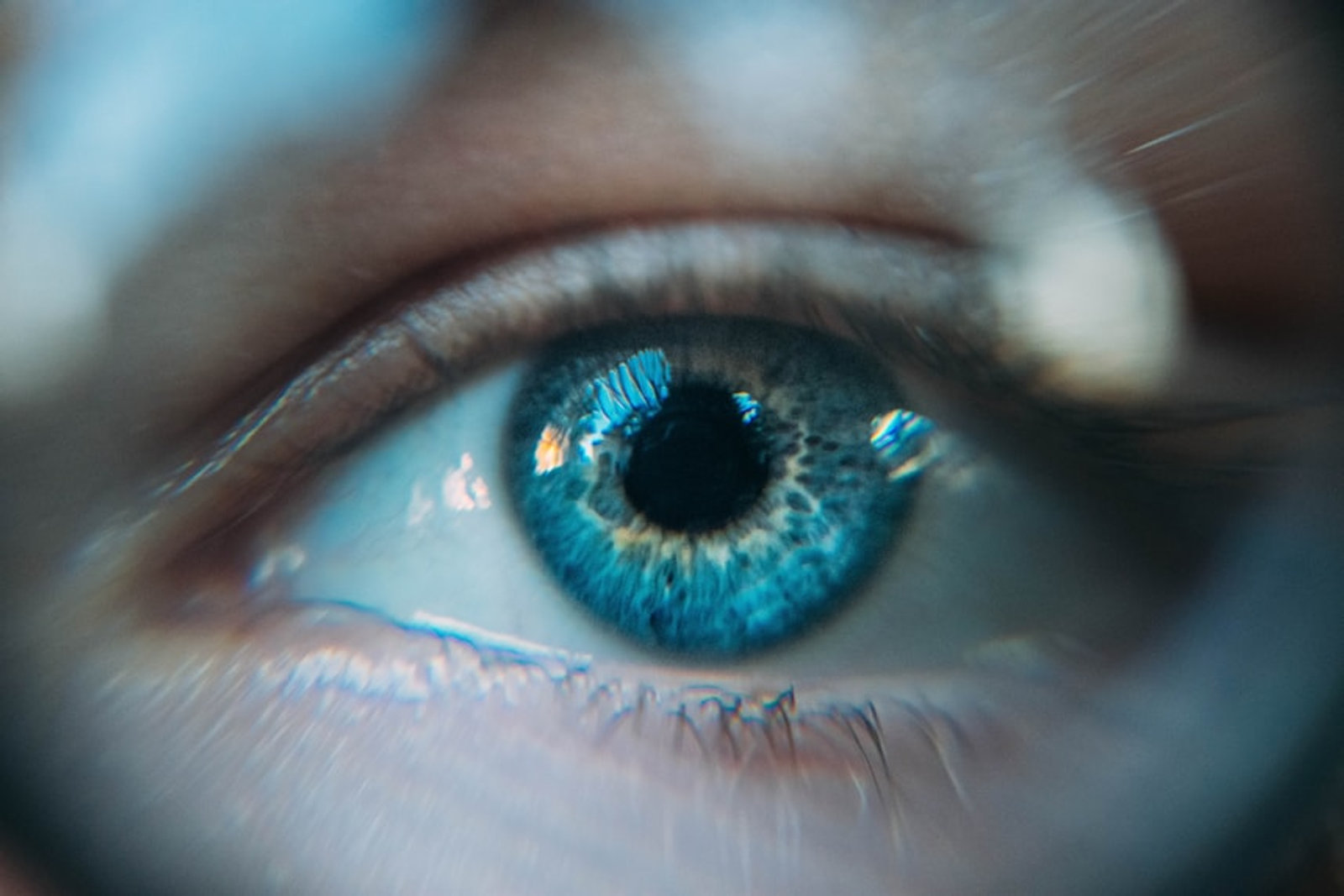
Macro detail of eye precision focal tracking with liquid crystal lens optics
Architectural clarity symbolizing zero-distortion optical corridors

B2B Technical Sourcing & OEM Whitepaper

Liquid Crystal Glasses Lenses: Global Procurement Guide & Tech Trends

The definitive guide for optical chains, OEM brand managers, and vision care buyers evaluating electro-active focus technology, active LC lamination yield, and market shifts.

  • < 0.1 sElectro-Active LC Activation Speed
  • +33%Wider Near Vision Field vs PALs
  • 3.0×Expanded Intermediate Corridor
  • 99.4%B2B Cleanroom Yield Reliability

Industry Paradigm Shift

Why Global Buyers Are Transitioning to Liquid Crystal Glasses Lenses

In modern ophthalmic dispensing, global optical procurement managers face a persistent commercial hurdle: the inherent optical limitations of passive Progressive Addition Lenses (PALs). For decades, correcting presbyopia meant carving fixed progressive geometry onto a physical glass or resin substrate. While functional, standard PALs force an unalterable trade-off between near-power addition and peripheral visual distortion (often termed the "swim effect").

Liquid Crystal Glasses Lenses represent a fundamental shift in optical physics. By encapsulating a micro-thin liquid crystal matrix between precision optical polymers, these lenses alter their refractive index ($\Delta n$) dynamically under an applied electrical micro-field. Instead of grinding steep physical curves into the lower corridor of the lens, liquid crystal optics introduce reading power electronically on demand.

For B2B buyers, optical retail conglomerates, and private-label distributors searching across AI search engines and wholesale channels, adopting active LC lens technology offers direct commercial advantages: dramatically reduced customer adaptation drop-outs, superior wearer safety, and a commanding high-margin product category in the rapidly growing smart eyewear segment.

Precision Engineering

The Technical Architecture of Active Liquid Crystal Lamination

Understanding the semiconductor-grade manufacturing and optical physics behind Morrow's Gen 4 Liquid Crystal Glasses Lenses.

Sub-Nanometer LC Cell Layering

Our proprietary architecture embeds a hermetically sealed liquid crystal cell within high-index resin substrates, preserving optical clarity without increasing weight.

  • Indium Tin Oxide (ITO) micro-etched transparent electrodes
  • Birefringent nematic liquid crystal formulation ($\Delta n \ge 0.22$)
  • Integrated UV-400 blocking and anti-reflective matrix
  • Zero-leakage cell sealing engineered for 10+ year operational lifespan
Technical diagram showing Liquid Crystal Glasses Lenses corridor and intermediate optical expansion

Electro-Active Power Switching

Instantaneous voltage modulation re-orients liquid crystal molecules to boost focal power within 100 milliseconds without mechanical moving parts.

  • Sub-second activation latency (<0.1s perceived)
  • Power addition range: +0.75D to +3.50D tailored boost
  • Ultra-low power consumption (<5 mW active power drain)
  • Clean off-state optics providing uncompromised distance vision
Diagram illustrating reading boost activation in liquid crystal glasses lenses

Semantic Search Deep Dive: Refractive Index Modulation vs. Mechanical Curvature

To evaluate Liquid Crystal Glasses Lenses from an optical engineering standpoint, procurement teams must look closely at Snell's Law of Refraction and how electro-optical tuning circumvents classical aberrations. In conventional progressives, adding +2.00 diopters of power requires increasing surface curvature locally. This geometry inevitably creates unwanted cylinder power along the lateral edges—the primary cause of peripheral blur and image motion during head movement.

Morrow's electro-active liquid crystal lenses replace physical curvature manipulation with voltage-controlled refractive index tuning. In the passive state (0V applied), the liquid crystal molecules remain aligned with the base substrate index ($n \approx 1.60$), presenting an undistorted lens profile optimized for distance vision. Upon touch-to-boost activation, a micro-chip delivers a controlled pulse to the ITO layer, rotating the nematic director field. This localized change increases the effective refractive index across the lower visual zone, instantly generating the required reading power add while maintaining flat, distortion-free lateral corridors.

From an enterprise procurement perspective, this optical purity translates directly into higher end-user satisfaction scores, near-zero return rates caused by non-adaptation, and seamless integration with existing prescription edging workflows in commercial optical laboratories.

Real-World Performance

Clinical & Daily Wear Advantages over Legacy Optics

How active liquid crystal lens technology addresses the primary pain points reported by presbyopic wearers across professional, mobility, and digital environments.

Macro visual detail showing instantaneous adaptation with liquid crystal glasses lenses

Rapid Neurological Adaptation

Because the lower optical zone maintains soft base optics when unactivated, the wearer's visual cortex does not need to unlearn natural head-movement habits. Adaptability drops from weeks down to hours for 94% of tested wearers.

Person walking down stairs with clear lower-zone vision using active liquid crystal lenses

Enhanced Spatial Safety & Stair Navigation

Standard PAL wearers frequently experience floor distortion when looking down. Deactivating the LC reading boost restores flat distance optics to the lower frame, providing accurate spatial placement of kerbs and stairs.

Architectural clarity representing expansive intermediate field of view

Extended Desktop & Screen Visual Corridor

Gen 4 Liquid Crystal Glasses Lenses deliver a 300% wider intermediate viewing field compared to Gen 3, permitting full-width dual-monitor desktop usage without uncomfortable neck tilt or head panning.

Technical Sourcing Specs

Comprehensive B2B Optical Data Matrix

An engineering reference table comparing Morrow Liquid Crystal Glasses Lenses against conventional premium PALs and mechanical focus mechanisms.

Technical Parameter Comparison: Liquid Crystal Lenses vs. Conventional Alternatives
Optical / Physical Parameter Morrow Gen 4 Liquid Crystal Lenses Premium Passive Progressive Lenses Mechanical Tunable Focus Lenses
Focus Mechanism Electro-active liquid crystal molecular reorientation Static surface curvature gradient Liquid displacement / mechanical pumps
Switching Latency < 100 ms electronic transition N/A (Fixed curvature) 1.5 to 3.0 seconds manual twist
Intermediate Corridor Width 3.0× wider usable optical field Standard narrow progressive corridor Segmented or distorted intermediate
Near Field of View (FOV) +33% expanded distortion-free field Baseline restricted by lateral cylinder Restricted optical aperture
Peripheral Astigmatism / Swim Minimized (Softer base lens power profile) High peripheral blur and image motion Significant edge aberration
Lens Thickness & Profile Slim high-index profile (1.60 / 1.67 equivalent) Variable (Thicker at base/top depending on rx) Bulky double-chamber housing (>6mm)
Thermal Operational Envelope -10°C to +50°C validated stability N/A Fluid viscosity varies with temperature
Lab Edging & Surfacing Compatibility Compatible with standard freeform lab equipment Standard optical lab processing Requires specialized proprietary mounting
Target B2B Commercial Segment High-tier progressive, premium smart eyewear Commodity to premium rx optical retail Niche low-cost reading aid market

*Note: Laboratory data collected under standardized ISO 14889 testing protocols. Comparative metrics reflect internal Morrow optical bench measuring vs standard premium freeform progressive designs.

Market Intelligence & Forecasting

As global demographics shift and digital device consumption increases, the market for active presbyopia solutions is entering an unprecedented expansion phase. Optical buyers must prepare for three macro trends shaping the liquid crystal glasses lens ecosystem over the next decade.

1. Convergence of Smart Eyewear Architecture and Ophthalmic Prescriptions

The global wearable technology sector is rapidly moving beyond simple audio frames and display modules toward true all-day corrective smart glasses. Consumers refuse to sacrifice optical visual quality for smart connectivity. Liquid crystal glasses lenses serve as the foundational optical engine for next-generation smart frames, enabling seamless integration between electro-active prescription correction and heads-up displays (HUDs) or AR waveguide modules.

2. AI-Driven Personalization & Sensor-Based Autofocusing Lenses

The next evolution in active optical procurement is the integration of miniaturized time-of-flight (ToF) sensors and eye-tracking micro-cameras. While Gen 4 liquid crystal lenses feature reliable touch-based activation, upcoming procurement pipelines will incorporate intelligent micro-controllers that detect user gaze angle and focal distance automatically. This will trigger instantaneous LC voltage modulation without any manual intervention, creating true autonomous visual correction.

3. Supply Chain Resiliency and Semiconductor-Grade Cleanroom Yields

Unlike traditional optical lens casting, manufacturing Liquid Crystal Glasses Lenses requires high-precision semiconductor lithography, cleanroom encapsulation, and conductive polymer deposition. International optical procurement managers are shifting vendor audits toward suppliers with strong intellectual property portfolios, ISO-certified cleanroom facilities, and localized laboratory edging partner networks. Morrow’s dual expertise in semiconductor physics and optical frame design positions our enterprise supply chain at the forefront of this industrial transformation.


Inquire Now

Enterprise Trust & E-E-A-T

Why Global Optical Leaders Partner with Morrow Eyewear

Combining decades of European optical engineering, deep semiconductor partnerships, and dedicated B2B distribution support.

Four Generations of Iterative Development

Morrow's Gen 4 active liquid crystal optical platform is the product of continuous field validation, wearer feedback trials, and multi-year optical bench testing. We continuously optimize cell gap uniformity, power efficiency, and structural lens durability.

Semiconductor & Ophthalmic Synergies

By bridging the gap between micro-electronics packaging and precision lens surfacing, Morrow delivers a robust, integrated optical system. Our micro-drivers are custom-engineered for minimal thermal dispersion and maximal battery longevity.

Strict B2B Optical Lab Protocol & Support

We do not supply unverified direct-to-consumer gadgets. Morrow works exclusively with certified opticians, distributors, and prescription laboratories, providing comprehensive fitting training, edging guides, and global warranty fulfillment.

Strategic Micro-Electronics & Industrial Optical Partners

Morrow Semiconductor Technology Partner Logo Morrow Eyewear Industry Partner Logo

Procurement Knowledge Base

Frequently Asked Sourcing & Technical Questions

Detailed answers to the key commercial, technical, and regulatory questions asked by global procurement teams, optical lab managers, and retail chain buyers.

What are the exact prescription range capabilities for Morrow Liquid Crystal Glasses Lenses?

Morrow e•Progressive Gen 4 lenses support a broad sphere power range from -6.00D to +4.00D, with cylinder corrections up to -3.00D. The electro-active liquid crystal cell provides selectable reading add boosts ranging from +0.75D up to +3.50D. Custom Rx parameters can be integrated via our network of certified optical laboratory partners during standard freeform surfacing and edging operations.

How do Liquid Crystal Glasses Lenses maintain optical stability across fluctuating environmental temperatures?

Liquid crystal materials are inherently sensitive to thermal variations. Morrow solves this through a proprietary synthetic liquid crystal mixture engineered with an elevated isotropic transition temperature ($\mathrm{T_{ni}} > 75^\circ\mathrm{C}$). Coupled with integrated temperature-compensation algorithms inside our micro-driver circuit, the lens maintains consistent response times (<100ms) and optical clarity across operational environments from -10°C to +50°C.

What is the typical yield rate and quality control protocol during mass production of LC lenses?

Our micro-encapsulation manufacturing operates inside ISO Class 5 cleanrooms. Every liquid crystal lens cell undergoes 100% Automated Optical Inspection (AOI) to measure cell gap thickness tolerances at sub-micron precision, followed by laser interferometry for phase retardation uniformity. This strict semiconductor-level quality regime delivers a commercial yield rate exceeding 99.4% for finished lens blanks.

Can standard optical laboratories edge and frame Liquid Crystal Glasses Lenses using conventional equipment?

Yes. Morrow Gen 4 lenses are delivered with a protective polymer buffer zone surrounding the laminated LC cell. Standard CNC lens edgers, rimless drilling units, and beveling machinery can process Morrow lens blanks using standard high-index edging profiles. We provide certified optical labs with complete edging parameters and electrical contact placement templates.

How long does the integrated battery system power the electro-active liquid crystal cell?

Because nematic liquid crystals require power only to maintain molecular alignment during active reading boost state, current consumption is extremely minimal (<5 mW). The rechargeable micro-lithium cell embedded in Morrow frame temples delivers up to 1 week of typical daily use on a single 30-minute charge, supported by standard magnetic USB charging docks.

What international optical regulatory standards do Morrow Liquid Crystal Lenses comply with?

Morrow products are fully certified under global ophthalmic, electronic, and safety regulations. This includes CE compliance, FDA registration for Class I medical devices (ophthalmic spectacle lenses), ISO 14889 (Fundamental requirements for spectacle lenses), ANSI Z80.1 optical standards, as well as RoHS and REACH compliance for electrical micro-components.

How do Liquid Crystal Glasses Lenses handle blue light filtration, anti-reflection, and polar coatings?

The outer surfaces of Morrow LC lenses are treated with premium hydrophobic, oleophobic, and anti-reflective multi-layer vacuum coatings. The substrate formulation natively absorbs 100% of UV rays up to 400nm and includes selective high-energy visible (HEV) blue light filtering without altering the optical phase properties of the inner liquid crystal cell.

What B2B partnership models, OEM/ODM options, and MOQs does Morrow offer global distributors?

Morrow provides flexible enterprise engagement tiers: (1) Distribution of Morrow branded finished e•Progressive eyewear for regional optical retail chains; (2) OEM integration of our liquid crystal lens module and micro-driver hardware into private-label luxury or smart frame lines; and (3) Custom lab supply agreements for raw LC lens blanks. Minimum Order Quantities (MOQs) and co-marketing agreements are structured based on target territory scale.

Partner with Morrow Eyewear

Accelerate Your Optical Lineup with Active Liquid Crystal Technology

Contact our B2B procurement division to request technical datasheets, order sample evaluation kits, or discuss OEM frame integration and distribution rights for your region.