Flagship Electronic Spectacles & Smart Eyewear Portfolio
Precision-engineered active optical systems, electrochromic smart sunglasses, and AI-assisted eyewear manufactured under ISO9001/ISO13485 cleanroom standards.
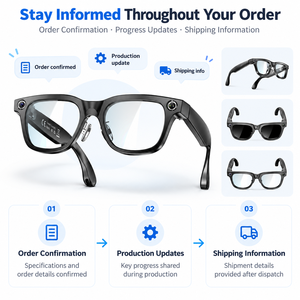
AI Smart Glasses 4K Camera AI Voice Control Photo Recognition Translation IP67 Waterproof Anti-Blue Light Lenses
Contact Us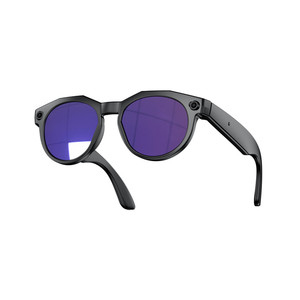
AI Smart Glasses with Camera Waterproof Wireless Music Listening Call Video Recording Photo Recognition Smart Eyewear
Contact Us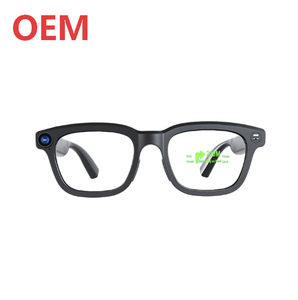
Intelligence AR Glasses Optical Waveguide Display Glasses Real-time Translation of HUD Navigation Inscriptions, Meeting Minutes
Contact Us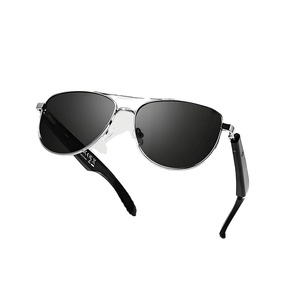
AI Smart Glasses Voice Assistant Hands-Free HD Calls Hi-Fi Audio Dual Battery Touch Control Magnetic Charging PC Frame
Contact Us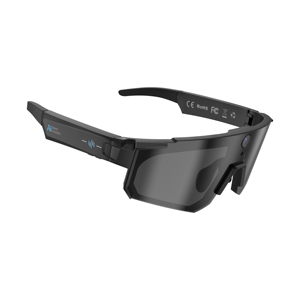
Smart AI Camera Glasses with Video Recording Bluetooth Audio Music Playback Voice Assistant Real Time Translation Sunglasses
Contact Us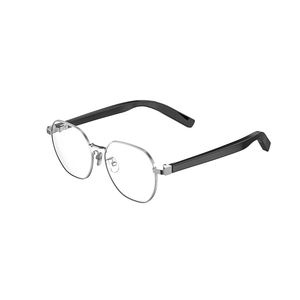
Voice Control Wireless Audio Eyewear Phone Music Remote Noise Reduction AI Smart Glasses
Contact Us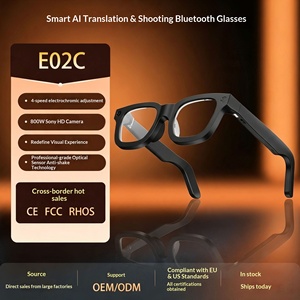
Cross-border E02C/E03C Electrochromic Smart Glasses 800W Pixel Shooting Call Listening Music AI Translation Sunglasses Touch
Contact Us
Hot Selling Solid Durable Advanced Professional Safety Glasses Industrial Wholesale
Contact UsWhy Partner with China's Premier Electronic Spectacles Manufacturer
Combining semiconductor micro-assembly, liquid-crystal lens lamination, and acoustic precision to supply global eyewear brands and optical retail chains.
Electro-Active Liquid Crystal Optics
Our cleanroom lens lamination line embeds wafer-thin liquid-crystal cells directly into optical substrates. By applying low-voltage signals, our lenses change local refractive index instantly—providing an instant reading boost without relying on bulky mechanical actuators.
Precision SMT & Micro-Assembly
Equipped with high-precision Surface Mount Technology (SMT) lines capable of mounting 0201 micro-components, ultra-compact Bluetooth SoCs, directional dual-microphone arrays, and power management ICs within ultra-narrow 3.5mm frame temples.
Comprehensive Global Certifications
Full compliance readiness for international buyers. Our electronic spectacles undergo rigorous testing to achieve CE, FCC, RoHS, REACH, IP67 dust/waterproof ratings, and ANSI Z87.1 optical impact standard compliance for global distribution security.
Custom Optical & Surface Treatments
From photochromic light-adapting coatings and electrochromic instant tint modulation to progressive presbyopia lens geometry, our optical laboratory provides bespoke coating, edging, and tinting services tailored to your brand’s specifications.
Turnkey OEM/ODM Engineering Support
We provide full-lifecycle product development: structural CAD design, acoustic resonance tuning, custom firmware (SDK integration for AI speech recognition), rapid 3D prototyping, tooling, mass production, and private-label packaging.
Agile Supply Chain & Logistics
Located in China's top optoelectronic manufacturing hub, our automated warehouse and strict ISO supply chain integration guarantee dependable component sourcing, shorter lead times, and streamlined global export logistics.
Next-Generation Technology Trends in Electronic Eyewear
How electro-active optics, liquid-crystal presbyopia correction, optical waveguides, and artificial intelligence are converging to redefine the global spectacle market.
Dynamic Electro-Active Presbyopia Lenses (e•Progressives)
Traditional progressive addition lenses (PALs) rely on fixed optical curves, forcing wearers to tolerate narrow vision corridors and peripheral swim distortion. Advanced electronic spectacles utilize dynamic liquid-crystal cells laminated inside the lens matrix. When activated electronically, the liquid crystals change orientation in under 0.1 seconds, boosting reading power dynamically. This innovation delivers up to a +33% wider near field of view and a 3× larger intermediate zone for comfortable long-duration digital screen use without spatial motion sickness.
Micro-HUD & Optical Waveguide AR Integration
The optical display paradigm in electronic spectacles has shifted from bulky free-form prisms to micro-diffractive optical waveguides paired with Micro-LED display engines. This enables light-transmissive heads-up displays (HUD) that overlay digital teleprompting, navigation arrows, and real-time meeting transcription directly onto the wearer's line of sight without obscuring ambient vision—all packaged inside standard-looking frame profiles weighing under 45 grams.
Directional Acoustic Open-Ear Audio Systems
Modern audio spectacles eliminate the isolation of in-ear earbuds by utilizing open-ear directional sound technology. Dual micro-speakers placed strategically in the temples direct soundwaves precisely into the ear canal while suppressing reverse-phase sound leakage. Coupled with dual-microphone Environmental Noise Cancellation (ENC), wearers experience crystal-clear hands-free telephony and voice assistant interaction in noisy urban environments.
Electrochromic Tint Switching & Smart Sensing
Say goodbye to slow static photochromic lenses that depend entirely on ambient UV light. Advanced electronic spectacles integrate electrochromic films that respond instantly to touch controls, ambient light sensors, or manual voltage adjustments. Users can adjust tint opacity seamlessly across multiple gradient levels—from 85% dark outdoor sunglass tint to crystal-clear indoor transparency—within milliseconds.
Global Sourcing Trends & B2B Purchasing Strategies
Strategic analysis for enterprise importers, brand owners, and optometric chains navigating the shift from traditional frames to smart electronic spectacles.
1. Market Shift Towards Prescription-Ready Smart Eyewear
Historically, smart glasses were treated as niche consumer electronics sold through tech channels. However, consumer demand has pivoted toward everyday wearability. Procurement teams are increasingly looking for China OEM partners capable of delivering prescription-ready electronic spectacles. Factories must offer modular frame architectures where certified opticians can easily insert custom single-vision or progressive prescription lenses into smart frames with adjustable nose pads, precise vertex alignment, and balanced weight distribution.
2. Integration of Multimodal AI & Camera Vision Systems
The rapid rise of large language models (LLMs) has converted electronic spectacles into voice and visual AI interfaces. Sourcing directors must prioritize factories with established hardware-software co-design pipelines. Modern smart glasses now demand high-resolution 4K or 8MP ultra-compact image sensors, low-power NPU chips for on-device OCR, photo recognition, and real-time voice translation—all while maintaining robust IP67 waterproof protection for outdoor durability.
3. Battery Safety, Power Efficiency, and Fast Charging Standards
Battery life remains a pivotal metric for user satisfaction. Enterprise buyers are shifting from single-battery temple designs to balanced dual-battery systems built into both frame arms. This dual-temple design yields better ergonomic weight distribution and longer operational hours. Manufacturers must supply fully certified Lithium-polymer micro-batteries passing UN38.3, IEC62133, and MSDS safety protocols, combined with magnetic quick-charging pins to ensure risk-free international shipping and consumer safety.
4. Supply Chain Consolidation in China Optical Clusters
Efficient OEM procurement requires tapping into integrated industrial ecosystems. Leading Chinese electronic spectacle manufacturers leverage the proximity of Shenzhen's electronics ecosystem alongside Danyang and Wenzhou's optical frame polishing hubs. This synergy reduces sample prototyping turnaround from months to under 14 days and lowers mass production unit costs by 25-30% compared to fragmented global supply chains.
Frequently Asked Sourcing & Technical Questions
Direct technical answers for opticians, B2B procurement managers, and OEM brand buyers.
How do dynamic liquid-crystal electronic spectacles work compared to traditional progressive lenses?
Our electronic spectacles laminate a precision liquid-crystal cell inside the optical lens matrix. When near-vision or reading boost is required, an integrated micro-driver applies a calibrated low-voltage electric signal to re-orient the liquid crystal molecules. This alters the local refractive index dynamically, instantly increasing reading addition power. When switched off, the lens returns to a clear, low-distortion state. Unlike traditional static progressive lenses that force peripheral blur and swim effect, liquid-crystal lenses maintain wide, clear distance optics with near power available on demand.
What customization services do your OEM/ODM factories offer for electronic smart glasses?
We offer full OEM/ODM manufacturing customization. This includes custom frame CAD design, material selection (TR90, Swiss Grilamid, Aerospace Titanium, Acetate), custom lens coatings (photochromic, anti-blue ray, electrochromic, prescription edging), custom firmware development (voice AI prompt integration, Bluetooth pairing names, custom touch-gestures), private-label logo laser engraving, and tailored retail packaging design.
What is the Minimum Order Quantity (MOQ) and sample lead time for wholesale sourcing?
For standard in-stock wholesale models, our standard MOQ starts at 50 units. For custom OEM branding (logo laser-etching and customized packaging), the MOQ is typically 500 units per model. For deep ODM projects involving unique mold tooling and custom SMT circuit designs, MOQ begins at 1,000 to 2,000 units. Sample evaluation units can be configured and shipped within 3 to 7 working days.
Are your camera and audio smart glasses certified for sale in North America and Europe?
Yes. All of our electronic spectacle series are engineered to satisfy global regulatory benchmarks. Products shipped to North America and Europe come fully certified with CE, FCC, RoHS, REACH, and RED (Radio Equipment Directive) test reports. Furthermore, our micro-batteries comply with UN38.3, IEC62133, and air/sea transport shipping safety standards.
How do your factories ensure optical quality control and high manufacturing yield?
Our production facilities operate under strict ISO9001 and ISO13485 cleanroom quality management standards. Every optical lens matrix undergoes automated optical inspection (AOI) for surface defects, refractive index consistency, and polarization alignment. Assembled smart frames are 100% tested for IP67 waterproof seal integrity, acoustic sound pressure levels (SPL), thermal dissipation during 4K video recording, and battery cycle stability prior to packaging.
Can prescription lenses (Rx) be installed into your smart AI camera and electrochromic glasses?
Absolutely. Most of our smart spectacle frames feature a modular front rim structure designed specifically to accommodate prescription single-vision or progressive optical lenses. Opticians can easily unclip the outer protective/electrochromic shield and fit custom prescription lenses without damaging the electronic components integrated into the temple arms.
How do electrochromic smart sunglasses differ from photochromic (transition) lenses?
Photochromic lenses rely on chemical reactions triggered by ambient ultraviolet (UV) sunlight, which can take several minutes to darken and up to five minutes to clear indoors—and often fail to darken behind UV-blocking automotive glass. In contrast, electrochromic smart glasses utilize voltage-controlled liquid crystal or organic dye layers that switch tint electronically in under 100 milliseconds at the user's command, regardless of UV exposure or temperature.
Accelerate Your Smart Eyewear Line with Factory-Direct OEM Manufacturing
Connect directly with our engineering team to request sample kits, request custom CAD design files, or receive comprehensive factory wholesale quotation packages.
Contact Us