B2B Optical Sourcing & Manufacturing Report

China Wholesale Adaptive Lenses Exporter & Exporters

Precision Photochromic, Blue-Cut, Polycarbonate & Liquid-Crystal Electro-Active Optical Solutions for Global OEM/ODM Procurement

15M+
Annual Export Units
Supplied to 80+ Countries
<0.1s
Electro-Active Reaction
Next-Gen LC Technology
99.8%
UV420 & Light Blocking
Adaptive Photomagic Tint
ISO 8980
Certified Factory
CE, FDA & GB Quality Compliant
Global Market Architecture

The Paradigm Shift in Adaptive Optical Lens Wholesale & Manufacturing

An authoritative technical analysis for optical B2B importers, laboratory buyers, retail chains, and international distributors sourcing photochromic and dynamic lenses from China.

Empowering Modern Presbyopia & Sunlight Protection Demands

The international ophthalmic optics market is experiencing a profound transition toward intelligent, multi-environment visual solutions. Traditional single-vision and static progressive lenses are increasingly yielding market share to adaptive lenses—a category encompassing photochromic molecular dyes, blue-light absorbing substrates, and active liquid-crystal dynamic focus cells.

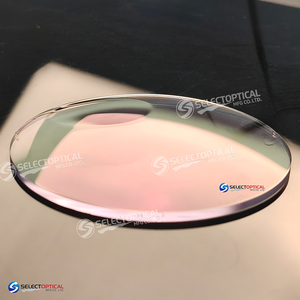
As the premier optical manufacturing hub in Danyang, Jiangsu, China accounts for over 65% of global ophthalmic lens blanks and finished prescription optics. As a premier China Wholesale Adaptive Lenses Exporter, our enterprise integrates advanced chemical spin-coating, vacuum AR deposition, and micro-electronic lamination to deliver superior optical clarity, fast activation times, and robust durability for international brand owners.

China Wholesale Adaptive Lenses Exporter Precision Manufacturing Base
Wholesale Product Lineup

High-Performance Wholesale Adaptive Lens Portfolio

Explore our export-grade catalog engineered for fast darkening response, crystal-clear indoor transmission, and comprehensive blue-light blocking.

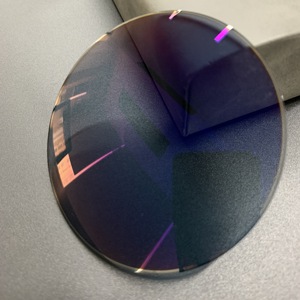
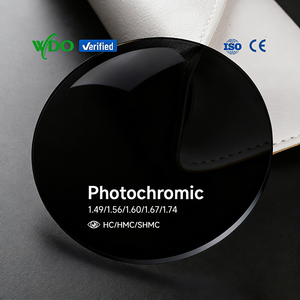
Adaptive Tint Flexible Polycarbonate Lenses Clear Color for Single Vision

Adaptive Tint Flexible Polycarbonate Lenses Clear Color for Single Vision

Engineered for extreme impact resistance and high flexibility. Fast UV-activated tint response from clear indoor to deep outdoor grey, ideal for rimless frames and active sports eyewear.

Material: Polycarbonate Index: 1.59 UV400 Protected
Contact Us
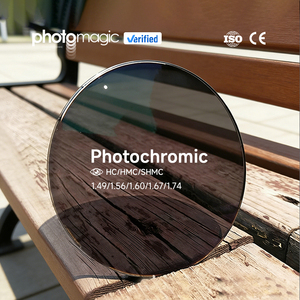
Premium 1.56 Photochromic Blue Cut Lenses High Quality

Premium 1.56 Photochromic Blue Cut Lenses High Quality Wholesale

Combines UV420 blue light filtration with rapid photochromic transition. Safeguards against digital screen glare indoors while offering instant sunlight shading outdoors.

Index: 1.56 HMC/SHMC Blue Cut UV420
Contact Us
Photomagic 1.56 Photochromic Blue Cut Lenses

Photomagic 1.56 Photochromic Blue Cut Lenses Top Selling Adaptive

Proprietary Photomagic spin-coating technology guarantees uniform tint fading and activation across high-diopter prescriptions without peripheral color rings.

Spin Coated Abbe Value: 38 Hydrophobic
Contact Us
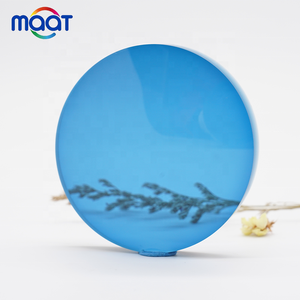
Light Adaptive Photo Blue Optical Lenses Semi-Finished

Light Adaptive Photo Blue Optical Lenses Semi-Finished Blanks

Precision semi-finished (SF) lens blanks designed for Rx freeform surfacing laboratories. Features vibrant Photo Blue tint shift under direct sunlight exposure.

Semi-Finished Blank Base Curves: 2-8 Photo Blue
Contact Us
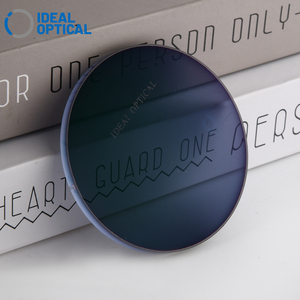
1.56 HMC CR39 Resin Photochromic Grey Lens Blue Cut

Hot Sale 1.56 HMC CR39 Resin Photochromic Grey Lens Blue Cut

High-clarity optical resin formulation integrated with multi-layer green/blue Anti-Reflective (HMC) coating. Excellent temperature stability and thermal endurance.

CR39 Resin Green AR Coating Grey Tint
Contact Us
Photomagic Hot Sale 1.56 HMC CR39 Resin Photochromic Grey Lens

Photomagic Hot Sale 1.56 HMC CR39 Resin Photochromic Grey Lens

High-volume wholesale favorite for retail chains and mass distributors. Offers baseline optical precision, fast clearing indoors, and consistent batch color accuracy.

Mass Dye Tech High Transmission OEM Packaging
Contact Us
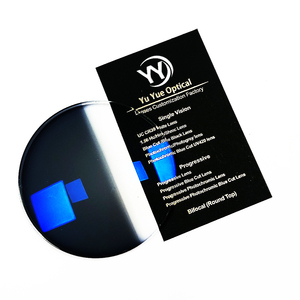
CR39 1.499 Bifocal Round Top Lens Adaptive Optical Lenses Wholesale Danyang Direct

CR39 1.499 Bifocal Round Top Lens Adaptive Optical Lenses Wholesale

Danyang factory-direct 28mm round-top bifocal lens with photochromic adaptive matrix. Perfect for traditional presbyopic correction requiring distinct near segment power.

Index: 1.499 Round Top 28mm Bifocal Segment
Contact Us
CR39 resin photo gray lens blue block adaptive Lentes Opticos 1.56 HMC brown

CR39 Resin Photo Gray / Brown Lens Blue Block Adaptive 1.56 HMC

Dual-action tint spectrum available in deep Grey and rich Warm Brown. Features integrated blue-light filtering monomers and scratch-resistant hard multi-coating.

Grey & Brown Blue Block Monomer Super Oleophobic
Contact Us
Technological Roadmap

Evolution of Adaptive Optics: From Chemical Dyes to Liquid Crystals

A deep dive into photochromic chemistry, high-index polymer matrices, and dynamic electro-active focus systems reshaping modern presbyopia treatment.

1. Spin-Coated Nanotechnology vs. In-Mass Dyeing

Traditional photochromic lenses relied on in-mass chemical dye distribution, where silver halide or naphthopyran molecules were mixed directly into the optical monomer prior to polymerization. While cost-effective, in-mass lenses suffered from uneven darkening on strong prescription lenses (thicker edges or centers appearing darker).

Modern Chinese exporters have scaled spin-coating nano-layer deposition. A uniform micro-film (30–50 microns) of photochromic dye is applied onto the front surface of finished 1.56, 1.61, 1.67, and 1.74 blanks, guaranteeing 100% consistent tint depth regardless of diopter prescription power.

  • Uniform tint density across high minus and plus prescriptions
  • Up to 45% faster fading time back to full indoor clarity
  • Compatibility with high-index MR-8 and MR-7 resin chemistries

2. Electro-Active Liquid Crystal (e-Progressive) Integration

The pinnacle of adaptive optics has advanced beyond solar UV reactivity to include active electronic focus manipulation. Pioneer optical developers like Morrow Eyewear have introduced liquid-crystal focus cells embedded directly inside progressive spectacle lenses.

When activated via low-voltage electrical stimulation, liquid-crystal molecules reorient their alignment in milliseconds, shifting local refractive indices to deliver instant reading power boost on demand—eliminating progressive side distortion and swim effect.

  • 3× larger intermediate vision corridor compared to conventional PALs
  • +33% wider near field of vision for digital reading
  • Instant micro-second electronic state switching
Gen 4 e-Progressive Electronic Lens Corridor Expansion Diagram

Structural Advantage: Electronic vs. Mechanical Surface Curve PALs

Standard Progressive Addition Lenses (PALs) physically mold astigmatic corridor geometry onto the optical surface, generating unwanted peripheral blur zones and image swim. By combining a soft fixed optical base curve with a laminated liquid-crystal active zone, adaptive electronic optics decouple distance clarity from reading magnification.

As detailed in the technical blueprint above, Gen 4 adaptive optical architectures enlarge the usable intermediate viewing zone by 300%—allowing wearers to transition seamlessly between laptop screens, car dashboards, and distant horizons without head movement strain.

Technical Data Index

Comprehensive Lens Substrate & Coating Specification Matrix

A rigorous benchmark table designed for B2B procurement managers to select optimal lens materials for target retail markets.

Substrate / Metric Refractive Index ($n_e$) Abbe Value ($\nu_d$) Specific Gravity UV Cutoff (nm) Photochromic Tech Primary B2B Target Market
1.499 CR-39 Resin 1.498 58 1.32 g/cm³ 350 - 400 nm Mass Dye / In-Bulk Budget Wholesale / Standard Single Vision
1.56 High Index Monomer 1.556 38 1.28 g/cm³ 400 - 420 nm Mass Dye & Spin-Coat Mass Market Best-Seller / Blue Cut Adaptive
1.59 Polycarbonate (PC) 1.586 30 1.20 g/cm³ 400 nm Surface Film / Spin-Coat Safety Glasses / Rimless / Sports Eyewear
1.61 MR-8 Resin 1.603 41 1.30 g/cm³ 400 - 420 nm Precision Spin-Coat Premium Retail Chains / Thin Rimless Rx
1.67 MR-7 High Index 1.660 32 1.35 g/cm³ 400 nm Nano-Film Deposition High Minus Prescriptions (-6.00D to -10.00D)
Liquid Crystal Dynamic Cell 1.50 - 1.67 Base >40 (Base) Lightweight Poly 400 nm + Active LC Electro-Active Modulation Next-Gen Smart Presbyopia Glasses
Global Sourcing Insights

2025–2030 Procurement Trends for Global Lens Importers

Key strategic forecasts for optical wholesalers navigating factory automation, OEM custom tinting, and international trade compliance.

1. Convergence of Blue-Cut & Photochromic Monomers

Separate blue-light blocking glasses and outdoor sunglasses are rapidly unifying. B2B buyers are shifting inventory toward dual-functional UV420 photochromic lenses. By integrating anti-blue light pyrazoline or iso-indole monomers into the resin mass while applying photochromic dye onto the surface, factories provide seamless protection for users who switch between computer screens and bright ambient sunlight.

2. Automated Freeform Rx & Private Label OEM

Global optical retail brands are diminishing their stock of finished single vision (FSV) lenses in favor of Just-In-Time (JIT) freeform semi-finished blank procurement. Chinese manufacturing facilities now offer automated digital surfacing (DS) and laser engraving for private-label brand logos directly on the lens corridor, reducing lead times to under 72 hours for custom rx orders.

3. ESG & Eco-Friendly Polymer Resin Sourcing

European and North American customs authorities are placing heightened emphasis on sustainable chemical supply chains. Leading Chinese adaptive lens exporters are adopting bio-based monomers, eco-friendly solventless spin-coating processes, and 100% recyclable paper sleeve packaging to assist global partners in meeting stringent carbon footprint reduction targets.

Manufacturing Authority

Why Partner with Our Danyang Optics Manufacturing Hub?

Demonstrating decades of industrial experience, state-of-the-art cleanroom infrastructure, and uncompromised quality assurance.

Class 10,000 Cleanrooms & German Satisloh AR Coating Lines

Optical purity requires pristine manufacturing environments. Our facility houses 12,000 square meters of dust-free cleanrooms equipped with German Satisloh vacuum AR coating chambers and Schneider freeform generators. Every batch of adaptive optical lenses undergoes rigorous spectrophotometric color testing, cross-hatch adhesion inspection, and artificial weathering tests in environmental chambers (-10°C to 50°C).

100% Batch Test
Transmittance & UV cut verify
Bespoke OEM
Custom envelope & micro-marking
China Wholesale Adaptive Lenses Exporter Quality Control Lab
Rapid Adaptation

Rapid Adaptation Curves

Our soft peripheral geometry allows new presbyopic wearers to adapt within 24–48 hours without feeling disorientation.

Spatial Depth Precision

Spatial Depth Perception

High Abbe value substrates minimize chromatic aberration, preserving clear depth perception for driving and sports.

Dynamic Focus

Dynamic Reading Boost

Seamless integration of electronic active boost technology for enhanced long-duration digital screen comfort.

Procurement Knowledge Base

Frequently Asked Questions (FAQ) for Optical Importers

Technical guidance covering order specifications, temperature sensitivity, coating options, and OEM logistics.

How do photochromic adaptive lenses react in hot tropical climates vs. cold winter environments?

Photochromic molecules undergo a reversible chemical transformation triggered by ambient UV light (315–380 nm). However, thermal kinetic energy opposes this reaction—meaning higher ambient temperatures cause molecules to fade back faster, resulting in slightly lighter tint in extreme heat (above 35°C).

To overcome this, our factory utilizes Temperature-Stabilized Matrix Dyes (TSMD) and surface spin-coating formulations that maintain dark optical density (up to Category 3, 15% light transmission) even in ambient temperatures exceeding 38°C.

What is the difference between standard mass-dye 1.56 photochromic and spin-coated 1.56 lenses?

Standard mass-dye lenses incorporate photochromic chemicals directly into the resin monomer prior to casting. While cost-effective, high minus or high plus prescription lenses will exhibit non-uniform darkening because thick areas hold more dye than thin areas.

Spin-coated lenses apply a micro-thin, uniform layer of photochromic dye exclusively onto the front optical surface. This guarantees 100% consistent darkening speed and depth across the entire visual field regardless of prescription thickness, while accelerating the fading transition back to clear indoors by up to 40%.

What Minimum Order Quantities (MOQ) and packaging options are available for OEM export?

For standard Stock Finished Lenses (FSV), our standard MOQ is 500 pairs per index/color combination. For Semi-Finished Blanks (SF), MOQs start at 100 pairs per base curve. We provide complete white-label OEM services including custom-printed paper envelopes, barcode labeling, hydrophobic top-coat branding, and neutral master carton export packaging.

Are your blue-cut adaptive lenses compliant with international FDA and CE regulatory standards?

Yes. All optical products exported from our manufacturing base strictly adhere to ISO 8980-1 (Transmittance specifications), ISO 8980-3 (Transmittance specifications and test methods), CE Mark compliance under Medical Device Regulation (MDR 2017/745), and US FDA 21 CFR 801.410 drop-ball impact resistance standard testing.

How does liquid crystal electro-active lens technology integrate into standard optical frames?

Electro-active adaptive lenses (such as Morrow e-Progressive systems) laminate a micro-thin liquid crystal cell inside a high-index resin composite. The frame chassis houses a miniature rechargeable micro-battery and micro-chip controller inside the temple arms. Standard dispensing opticians can adjust vertex distance, pantoscopic tilt, and nose pads using standard optical bench tools without damaging the embedded LC layer.

What anti-reflective (AR) coating stacks are recommended for export markets?

We supply three primary coating stacks: HMC (Hard Multi-Coated Green/Blue AR) for standard optical clarity; SHMC (Super Hydrophobic Multi-Coated) offering superior water, oil, and dust repellency; and Anti-Static Oleophobic Coating designed for extreme dust environments and easy cleaning.

Partner with China's Premier Adaptive Lens Exporter

Request an instant B2B factory direct quote, order technical sample kits, or consult with our senior optical engineers for OEM/ODM prescription lens manufacturing.