Featured Liquid Crystal Products & Processing Machinery
Direct OEM/ODM catalog from leading Chinese chemical labs, optical lens manufacturers, and industrial crystal reactor engineering facilities.
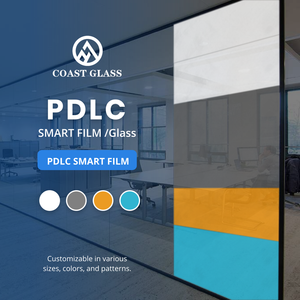
Polymer Dispersed Liquid Crystal Decorative Glass Unique Product Type
Switchable privacy PDLC smart glass engineered for architectural partitions, modern facade glazing, and high-end electro-chromic interior design.
Get Catalog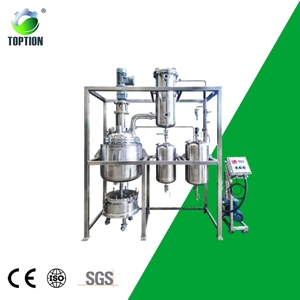
TOPTION 100L Chemical Stainless Steel Crystallizer Reactor
Industrial grade jacketed jacket crystallization reactor vessel optimized for precision thermal control during liquid crystal monomer synthesis.
Get Catalog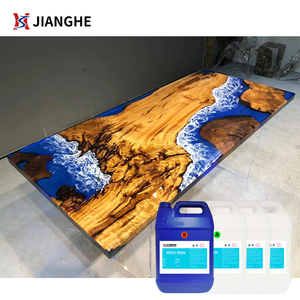
Wholesale Crystal AB Glue Adhesive Self Leveling Clear Epoxy
Ultra-clear liquid epoxy resin formulation featuring optical clarity, anti-yellowing UV resistance, and zero bubble self-leveling properties.
Get Catalog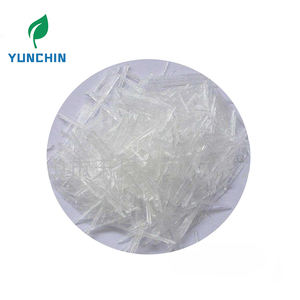
High Purity Menthol Crystal Mint Food Grade 99% Pure
Natural L-menthol crystalline extract manufactured under GMP pharmaceutical standards for cooling agents, cosmetics, and food ingredients.
Get Catalog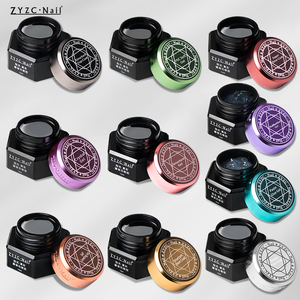
ZYZC Professional Clear UV Wear Resistant Function Gel
High-viscosity photopolymerizable liquid crystal gel matrix designed for rapid UV curing, mechanical durability, and long-lasting optical gloss.
Get Catalog
Maltitol Crystal Powder E965 Non-Hygroscopic Alternative
Dry crystalline polyol sweetener with low moisture absorption profiles, serving as a premium solid replacement for liquid maltitol syrup.
Get Catalog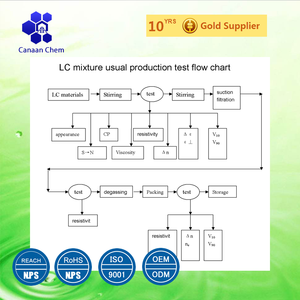
RM82 Nematic Liquid Crystal Monomer (CAS 125248-71-7)
High-purity reactive mesogen (RM82) formulated for electro-active optical films, European PDLC smart window lamination, and anisotropic displays.
Get Catalog
100% Pure Natural Menthol Crystal Purity 99% Grade
Pure organic botanical crystal solids extracted via fractional freezing, providing precise melting parameters and consistent chemical stability.
Get CatalogThe Physics & Evolution of Liquid Crystal Manufacturing in China
Liquid Crystal (LC) materials occupy a unique state of matter combining the fluidic dynamics of liquids with the optical anisotropy of crystalline solids. Over the past decade, Chinese manufacturing clusters in Guangdong, Jiangsu, and Shandong have transitioned from basic chemical synthesis to producing semiconductor-grade thermotropic and nematic liquid crystals, such as RM82 (CAS 125248-71-7) and specialized reactive mesogens.
Through precise manipulation of molecular orientation via low-voltage electric fields, modern liquid crystal devices dynamically alter their refractive index ($\Delta n$). This fundamental optical mechanism forms the foundation for both high-definition privacy PDLC smart glass and cutting-edge electro-active ophthalmic lenses.
- Nematic Phase Alignment for rapid dielectric torque response
- Low power consumption (<5V activation threshold)
- High birefringence ratios for ultrathin optical cell lamination

Next-Generation Active-Focus Optics: How Liquid Crystal Cells Redefine Vision
Bridging fine chemical synthesis with micro-electronics to solve presbyopia correction distortion through real-time molecular refractive switching.
Integrated LC Lamination
A micro-thin liquid-crystal cell is precision-laminated directly inside the optical lens matrix. When activated, the liquid crystal molecules reorient within milliseconds, temporarily elevating the refractive index of the target zone to provide effortless reading boost.
+33% Wider Field of View
Unlike conventional progressive addition lenses (PALs) that induce unwanted lateral astigmatism and swim effect, electro-active LC optics deliver an uninterrupted +33% wider near vision area and a 3.0× larger intermediate vision corridor.
Sub-Second Adaptation
Because the lower zone of the lens only requires a soft fixed correction when unpowered, wearers experience immediate spatial comfort when walking, descending stairs, or driving, completely eliminating traditional adaptation fatigue.


Technical Specification Benchmark: Liquid Crystal Optics vs. Conventional Components
Comprehensive technical data comparing electro-active liquid crystal lens assemblies against traditional fixed geometry progressive spectacle lenses for optical distributors and OEM procurement managers.
| Optical & Physical Parameter | Electro-Active LC Progressive Lens (Gen 4) | Conventional Progressive Lens (PAL) | B2B Sourcing Advantage |
|---|---|---|---|
| Optical Power Switching Source | Dynamic Low-Voltage Liquid Crystal Cell | Fixed Surface Curvature Geometry | Eliminates permanent peripheral distortion |
| Intermediate Corridor Area | 3.0× Expanded Usable Optical Zone | Restricted Narrow Corridor | Superior comfort for digital screen usage |
| Near Vision Field Angle | Up to +33% Expanded View Angle | Standard Fixed Baseline | Enhanced ergonomic reading posture |
| Nematic LC Purity Standard | ≥ 99.8% (HPLC Monomer Purification) | N/A (Resin Only) | Ensures high contrast & zero light scattering |
| Adaptation Horizon | Immediate to < 24 Hours | 7 to 21 Days Average Adaptation | Lower return rate for retail opticians |
| Cell Thickness & Durability | Micro-Laminated UV-Cured Resin Shield | Monolithic Cast Plastic | Shock resistant, scratch proof hard-coating |

Industrial Chemical Synthesis & Precise Crystallization Tech
The quality of liquid crystal displays, PDLC smart films, and tunable focus lenses depends on strict chemical crystallization processes. Utilizing specialized industrial machinery—such as TOPTION 100L Stainless Steel Chemical Crystallizers—Chinese chemical processing centers achieve strict crystal nucleation control.
Whether synthesizing high-purity food/pharma grade Natural Menthol Crystals (99%), dry-form Maltitol Crystal Powder (E965), or optical-grade self-leveling Crystal AB Epoxy Resins, exact thermal control prevents lattice defects and maintains chemical purity.
- Jacketed reactor pressure vessels with automated thermal profiling
- Closed-loop solvent recovery eliminating environmental VOCs
- Continuous crystallization technology ensuring uniform particle sizing
Enterprise Competitiveness & Manufacturing Rigor
Adhering to strict international standards, China’s liquid crystal production ecosystem provides end-to-end capabilities from raw chemical synthesis to finished electro-optic hardware integration.
1. Semiconductor Cleanroom Lamination
All electro-active liquid crystal lenses and PDLC films are manufactured inside ISO Class 5 (Class 100) microelectronics cleanrooms, preventing airborne micro-particulates from compromising optical cell integrity.
2. Cross-Disciplinary R&D Alliances
Combining semiconductor engineering, active-matrix driver electronics, and optical lens surfacing, Chinese factories collaborate directly with leading optical partners worldwide to maintain rapid iteration cycles.
3. Strict Quality Assurance Protocols
Products undergo rigorous environmental thermal stress testing (-40°C to +85°C), high-humidity cell degradation checks, UV aging resistance trials, and HPLC purity validation prior to global shipment.


Global Procurement & Future Technology Trends (2025–2030)
As global demand expands across smart building infrastructure, wearable spatial computing, and healthcare optics, liquid crystal procurement strategies are undergoing four key transformations:
A. Integration of Smart Wearables & Dynamic Prescription Eyewear
Traditional fixed progressive lenses are steadily yielding market share to dynamic active-focus spectacles. Future procurement will prioritize custom LC lens blank formulations compatible with prescription surfacing laboratories across Europe and North America.
B. Low-Voltage Architectural PDLC Smart Glass
Next-generation polymer dispersed liquid crystal films operate at reduced operating voltages (<24V AC), integrating seamlessly with solar-powered smart building facades and automotive privacy sunroof modules.
C. Sustainable Chemical Crystallization & Green Synthesis
Top Chinese chemical factories are adopting closed-loop enzymatic crystallization for natural menthol and maltitol processing, alongside zero-emission solvent distillation systems for nematic LC monomers like RM82.
D. Direct Customization & Agile OEM Supply Chains
B2B buyers increasingly require flexible production runs, rapid custom prototyping of reactive mesogens, specialized LC viscosity tuning, and direct factory technical support from design to mass delivery.
Frequently Asked Technical & Procurement Questions
Essential technical answers for optical buyers, chemical importers, and industrial procurement managers.
How do electro-active liquid crystal lenses function in presbyopia correction?
What purity standards are guaranteed for RM82 nematic liquid crystal monomers?
What are the technical advantages of industrial stainless steel crystallizers?
Why do wearers adapt faster to liquid crystal e-Progressive lenses than traditional progressives?
What documentation and compliance certificates are supplied with global shipments?
How can distributors request customized OEM samples or batch quotes?
Request Complete Liquid Crystal Technical Catalog & Quotations
Access detailed technical specifications, HPLC lab reports, processing equipment schematics, and volume B2B pricing for China's leading liquid crystal products.