Featured Precision Focus & Collimator Lenses
Direct factory supply of ultra-high precision optical lenses engineered for minimum insertion loss, extreme thermal resilience, and maximum laser beam focus consistency.
China's Premier Optical Manufacturing Ecosystem for Precision Focus Lenses
As a leading custom optics factory and B2B OEM supplier in China, our facility operates at the intersection of material science, ultra-precision single-point diamond turning (SPDT), and advanced thin-film coating technology. Industrial laser systems, high-speed automated machine vision, and photonic processing units require focusing optics that deliver absolute mechanical stability, zero thermal drift, and diffraction-limited spatial resolution.
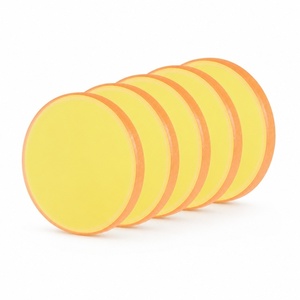
Modern photonic manufacturing requires an uncompromising stance on raw material purity and optical polish quality. By sourcing chemical vapor deposition (CVD) Zinc Selenide (ZnSe) substrates from top-tier global producers and pairing them with proprietary double-sided anti-reflection (AR) coatings, our focusing optics achieve unmatched power handling capability in high-wattage CO2 cutting and fiber laser welding operations.
Information Gain Insight: Standard optical lenses suffer from severe thermal lensing under multi-kilowatt laser exposure, causing the focal point to shift along the z-axis and leading to wider kerfs, rough dross formation, and reduced throughput. Our optics feature physical vapor deposition (PVD) dielectric coatings with bulk absorption metrics strictly contained below 0.15%, preventing focal spot migration even during continuous 24/7 manufacturing cycles.
Substrate Selection & Material Physics
Selecting the optimal focus lens substrate depends on operating wavelength, laser power density, environmental thermal stress, and target application requirements:
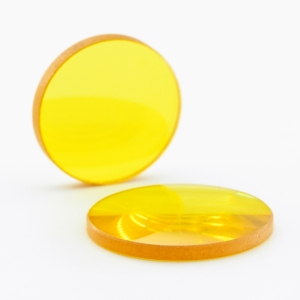
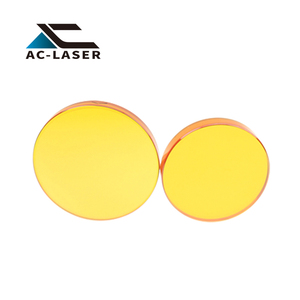
- USA CVD Zinc Selenide (ZnSe): Exhibiting extremely low bulk absorption at the 10.6μm infrared spectrum, CVD ZnSe is the industry standard for CO2 laser processing. Its low scatter coefficient and superior optical homogeneity guarantee minimal power attenuation.
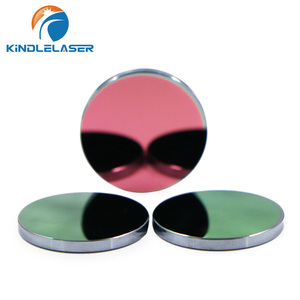
- Gallium Arsenide (GaAs): Valued for its robust mechanical toughness, high thermal conductivity, and resistance to harsh industrial spatter. GaAs focus lenses are highly favored in extreme-duty cutting environments where optics face frequent contamination risks.
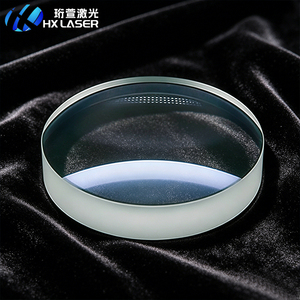
- Synthetic Fused Silica (JGS1 / Quartz): Essential for 1064nm fiber laser cutting and 3000W+ welding heads, offering high damage thresholds (>15 J/cm²), ultra-low internal stress, and superior transmission across UV-Vis-NIR bands.
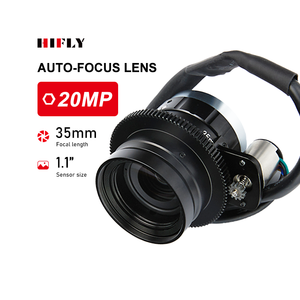
- High-Index Optical Glass (N-BK7 / Lanthanum Glass): Utilized in 20MP machine vision C-mount auto-focus optical assemblies to eliminate chromatic aberration and maximize Modulation Transfer Function (MTF) sharpness across entire sensor areas.
Designed for Next-Generation Industrial Automation
Our focus lenses are engineered to exceed strict OEM tolerances across high-power laser material processing, precision automated inspection, and robotic assembly systems.
CO2 Laser Cutting & Engraving
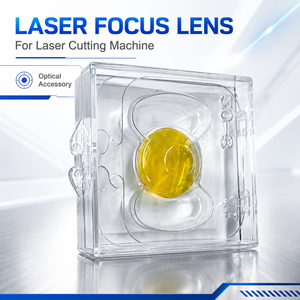
Meniscus and plano-convex ZnSe focus lenses optimized for 10.6μm wavelength lasers. Diameters ranging from 12mm to 38.1mm with focal lengths from 1" (25.4mm) to 4" (101.6mm) deliver microscopic spot sizes and smooth cut edges on metals, acrylics, and woods.
High-Power Fiber Laser Welding
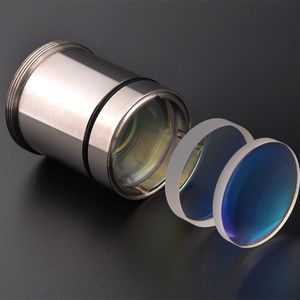
Precision collimator and focus lens pairs rated up to 3000W–30kW for 1064nm fiber laser systems. Featuring specialized fused silica substrates, high laser damage threshold coatings, and low thermal expansion cell mounts to minimize thermal defocusing.
20MP Motorized Auto-Focus Vision
1.1" large format C-mount motorized focus lenses engineered for high-resolution machine vision cameras. Integrated micro-stepper motors enable rapid focus adjustments for real-time 3D scanning, PCB inspection, and automated sorting.
Focus Lens Engineering Specifications & Benchmark Matrix
To assist optical design engineers and procurement teams in specifying the correct lens geometry, the table below outlines technical parameters across our primary product series.
| Lens Category | Primary Substrates | Wavelength Range | Clear Aperture | Surface Quality | AR Transmittance |
|---|---|---|---|---|---|
| CO2 Meniscus Focus Lens | USA CVD ZnSe / GaAs | 10.6 μm (IR) | > 90% of Diameter | 20/10 Scratch-Dig | ≥ 99.5% |
| Fiber Collimator & Focus Lens | JGS1 Synthetic Fused Silica | 1064 nm (NIR) | > 92% of Diameter | 10/5 Scratch-Dig | ≥ 99.8% |
| Machine Vision Motorized Lens | Optical Glass / Lanthanum | 400 nm – 950 nm (VIS-NIR) | Full 1.1" Sensor Format | 40/20 Scratch-Dig | ≥ 98.0% |
| GaAs Thermal Cut Focus Lens | Single-Crystal GaAs | 10.6 μm (IR) | > 88% of Diameter | 20/10 Scratch-Dig | ≥ 99.0% |
Future Procurement & Technology Trends in Industrial Optics (2025–2030)
The global precision optics landscape is undergoing rapid technological updates driven by industrial automation, ultra-fast laser processing, and smart factory integration. When evaluating lens suppliers in China, enterprise buyers should consider four critical optical hardware trends:
1. Shift Toward Active Motorized & Smart Auto-Focusing Optics
Fixed focal length lenses are increasingly being augmented by dynamic, motorized auto-focus systems in machine vision and robotic laser processing heads. With 1.1" 20MP motorized C-mount lenses, automated production lines can shift focus between multi-tiered workpieces in milliseconds without operator intervention, drastically cutting retooling downtime.
2. Scaling Fiber Laser Power Beyond 30 kW
As metal cutting and welding systems scale from 10kW to 30kW+ output power, conventional optical glass lenses fail due to thermal deformation. High-purity synthetic fused silica focusing and collimating lenses featuring absorption rates < 5 ppm/cm are mandatory to prevent beam degradation and keep spot sizes stable under multi-kilowatt power densities.
3. Enhanced Thin-Film Coatings for Harsh Environments
Laser cutting heads generate extreme localized heat, smoke, and metal spatter. Next-generation focus lenses feature hybrid hard-coatings (such as Diamond-Like Carbon protective layers or dense IBS sputter coatings) that resist scratching, humidity, and thermal shock, dramatically lowering long-term maintenance costs for end-users.
4. Direct Factory Customization (OEM/ODM) & Rapid Prototyping
System integrators are moving away from off-the-shelf distributor catalog items in favor of direct factory collaboration. Customizing mechanical outer diameters (D12 to D38.1mm), anti-reflective coating windows, and exact focal lengths (FL 25.4mm to 101.6mm) allows equipment manufacturers to optimize machine footprints while retaining exclusive IP.
B2B Procurement Playbook: How to Evaluate Focus Lens Manufacturers in China
Ensuring optical consistency across batch orders requires rigorous audit protocols. When selecting a Chinese focusing lens factory, quality assurance engineers should verify the following capabilities:
- Substrate Verification & Certification: Insist on certified spectroscopy test reports confirming substrate origin (e.g., authentic USA CVD ZnSe vs. standard domestic grade) to guarantee low optical absorption at 10.6μm.
- Metrology & Surface Roughness Testing: Reliable factories utilize Zygo Verifire laser interferometers to verify surface figure accuracy (λ/4 per inch) and atomic force microscopy (AFM) to ensure surface roughness remains below 1 nm RMS.
- Coating Durability Compliance: Coatings must adhere strictly to MIL-C-48497A standards for severe abrasion, humidity resistance, and temperature cycle stability (-50°C to +120°C).
- Cleanroom Packaging Standards: Infrared and high-power laser optics must be cleaned, inspected under darkfield illumination, and vacuum-sealed in Class 100 / ISO 5 cleanrooms to eliminate organic contaminants that trigger laser burn spots upon initial pulse.
Frequently Asked Questions (FAQ)
Clear engineering answers to common technical queries regarding focus lens selection, installation, and custom factory manufacturing.
What is the main difference between Meniscus and Plano-Convex focus lenses for CO2 lasers?
Why is USA CVD ZnSe preferred over standard ZnSe material?
How do I choose the correct focal length (FL) for my laser cutting process?
What are the key advantages of GaAs focus lenses over ZnSe lenses?
Can you manufacture custom lens diameters and focal lengths to OEM specifications?
How should industrial focus lenses be cleaned and maintained to prevent damage?
What is your typical production lead time for bulk OEM focus lens orders?
Partner with China's Premier Focus Lens Manufacturer
Need custom optical engineering, bulk factory pricing, or sample evaluation for your industrial laser systems or machine vision cameras? Contact our expert optical engineers today.